
Discover the Soul of South India: A Beginner’s Guide to Carnatic Vocal Music 🎶
Have you ever heard a voice glide through intricate patterns of melody, weaving devotion and discipline into every note? That’s the power of Carnatic vocal music, one of the world’s oldest and most spiritually rich forms of music.
Whether you’re a curious listener, a budding musician, or just someone looking to explore the diverse sounds of India, this post will guide you through the enchanting world of Carnatic singing — where every raga tells a story, and every note is a prayer.
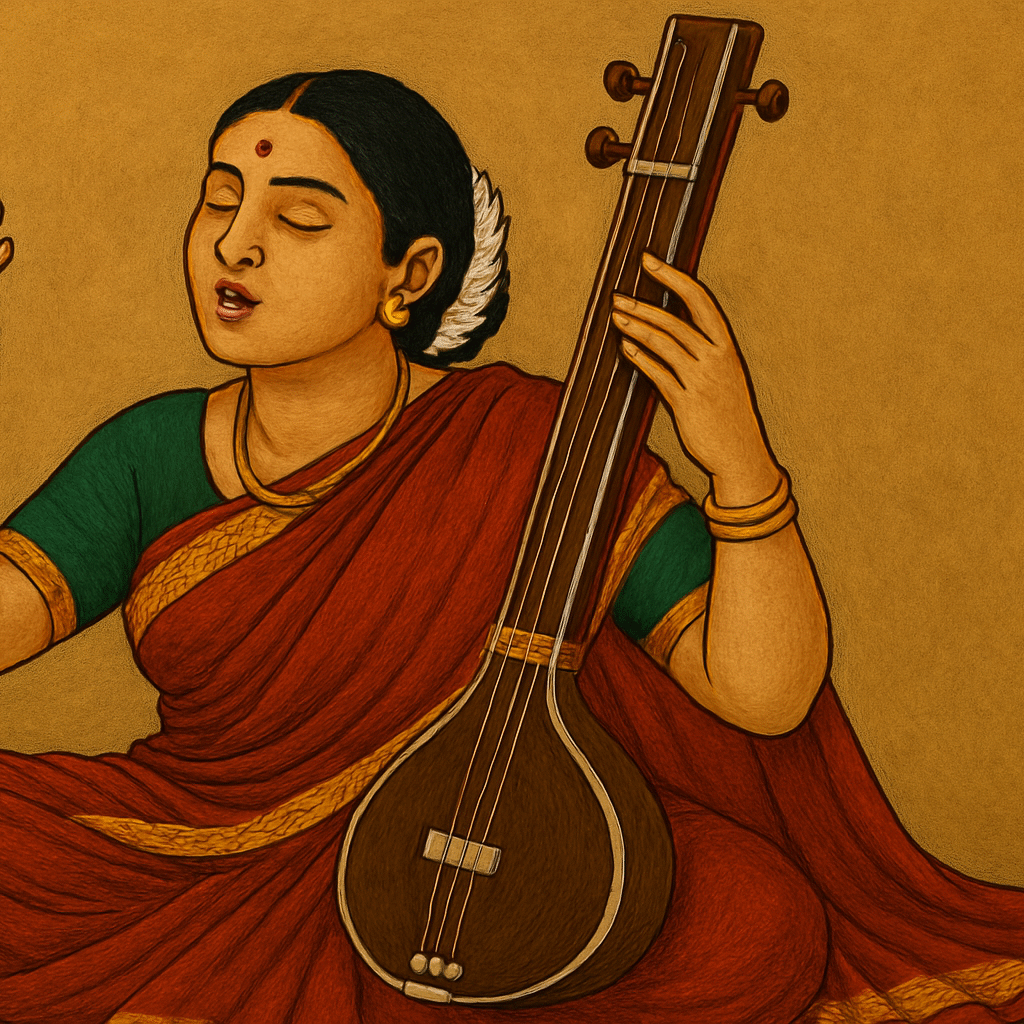
🎵 What Is Carnatic Vocal Music?
Carnatic music is a classical music tradition that originated in South India, particularly in the states of Tamil Nadu, Andhra Pradesh, Karnataka, and Kerala. Unlike its North Indian cousin, Hindustani music, Carnatic music is more composition-based and places a strong emphasis on vocal performance.
Even instrumental renditions in Carnatic music are often modeled after vocal techniques. That’s how central the human voice is to this tradition!
🧭 The Core Elements: Raga, Tala, and Bhava
At the heart of Carnatic music lie three main pillars:
- Raga (Melody): A raga is not just a scale; it’s an emotional landscape. Each raga has a distinct personality and time of day associated with it.
- Tala (Rhythm): The rhythmic structure or cycle that gives the music its tempo and framework. There are hundreds of talas, from the common Adi tala to complex cycles like Khanda Chapu.
- Bhava (Expression): Perhaps the most important — the emotion and spiritual intent behind the music.
A Carnatic vocalist brings all these together to create an experience that’s both technical and deeply moving.
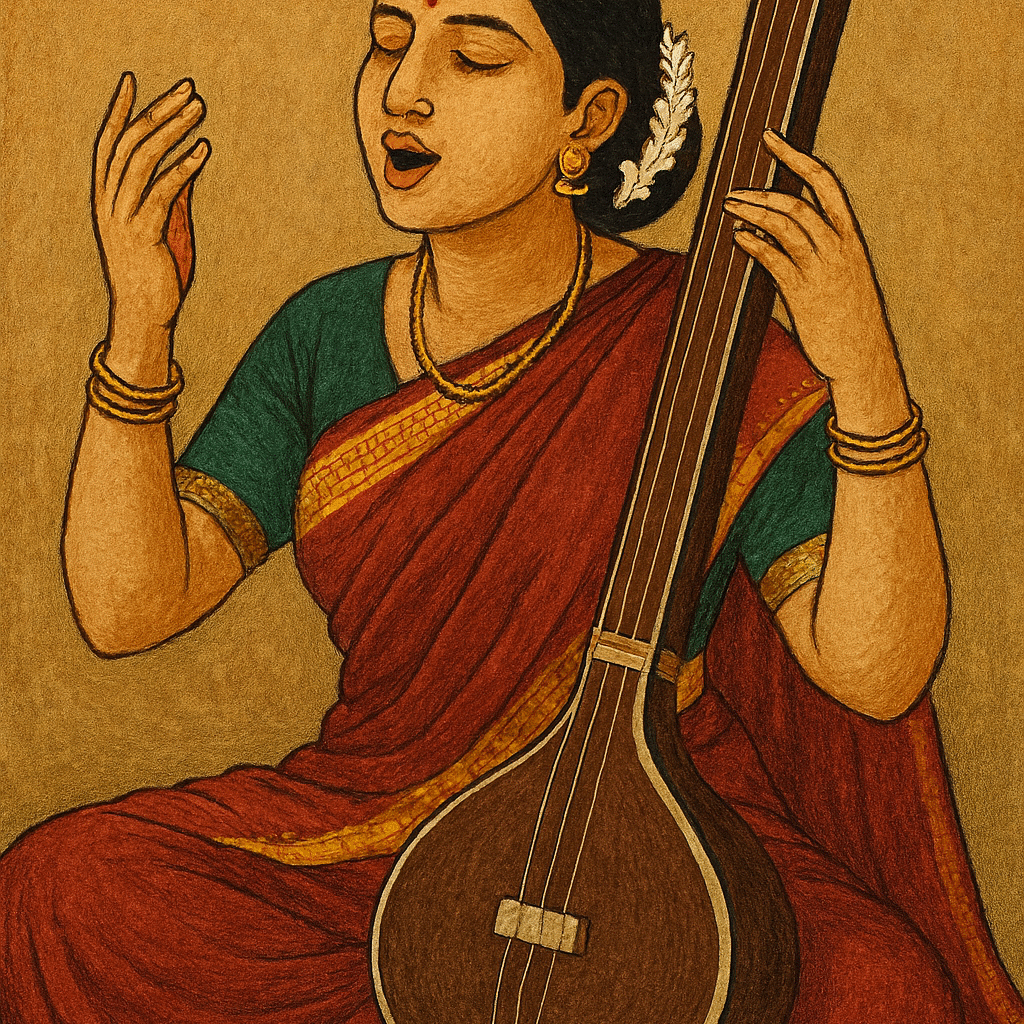
🎶 The Structure of a Carnatic Vocal Concert
A traditional Carnatic vocal concert isn’t just a collection of songs — it’s a journey.
Here’s how it usually flows:
- Varnam – A warm-up piece showcasing both raga and rhythm.
- Kriti – The main compositions, typically in praise of Hindu deities, with rich lyrical and melodic content.
- Alaapana – An improvisational exploration of a raga.
- Neraval & Kalpana Swaram – Sections of improvisation to showcase the artist’s creativity.
- Ragam-Tanam-Pallavi (RTP) – The most complex and respected form, often the centerpiece of the concert.
- Tukkadas – Light, devotional, or patriotic songs to close out the performance.
Each element reflects a different facet of the performer’s skill, devotion, and understanding of the art.
🎤 Learning Carnatic Vocal Music: What to Expect
Thinking of learning Carnatic vocal music? Great choice!
Here’s what your journey might look like:
- Basic Lessons (Sarali Varisai & Janta Varisai): To build your pitch accuracy and vocal strength.
- Geethams and Varnams: Introducing melody and rhythm.
- Kritis and Manodharma: As you progress, you’ll dive into improvisation and advanced compositions.
Classes are traditionally taught in a guru-shishya (teacher-student) setup, either in person or online. Patience and practice are key — this is not just about singing but understanding a centuries-old tradition.
🙏 The Spiritual Connection
One thing that sets Carnatic vocal music apart is its deep spiritual foundation. Most compositions are devotional, often sung in praise of deities like Lord Krishna, Shiva, or Devi.
Even if you’re not religious, there’s a profound emotional resonance in the music that can be felt by anyone — it’s about feeling something greater than yourself through voice and vibration.
🌍 Carnatic Music in the Modern World
Today, Carnatic vocal music isn’t confined to South India. From packed sabhas (concert halls) in Chennai during the December music season to global stages in the U.S., U.K., and beyond — it’s reaching new audiences.
Many artists are even experimenting with fusion, blending Carnatic with jazz, electronic, or pop music, while still honoring the tradition.
🎯 Final Notes (Pun Intended!)
Carnatic vocal music isn’t just a genre — it’s a way of life. It teaches discipline, devotion, creativity, and connection. Whether you’re singing or simply listening, there’s something incredibly grounding and elevating about immersing yourself in this art.
So, next time you hear a soulful aalap or a rhythmic korvai, take a moment to let it in. You might just find yourself transported.